India at the Core, the World as a Satellite
Nov 25, 2026 
After a two-year lull, the Nifty 50 rose 15.7% in six weeks to 25 November 2026, while Taiwan, Korea, Brazil and the Nasdaq fell 13% to 20%. Seven years of index data point to one lesson: keep India at the core, add a 10%–15% overseas satellite, and stay invested.
The rebound nobody could time
From October 2024 to October 2026, the Nifty 50 fell 11.0% while the S&P 500 rose 33%. Then, between mid-October and 25 November 2026, the Sensex rose 17.1% and the Nifty 50 15.7% to 25,869. Most of the two-year loss came back in about six weeks. Investors who stopped SIPs or redeemed during the lull missed it.
India is one market in a very large world
India's share of global market value rose to 3.37% in mid-November, from 2.97% at the start of October. Even so, more than 96% of the world's listed equity sits outside India, and India is only 10.65% of the MSCI Emerging Markets index.
Leadership keeps rotating
The same markets went through three very different phases in seven years. India went from first, to last, to first again.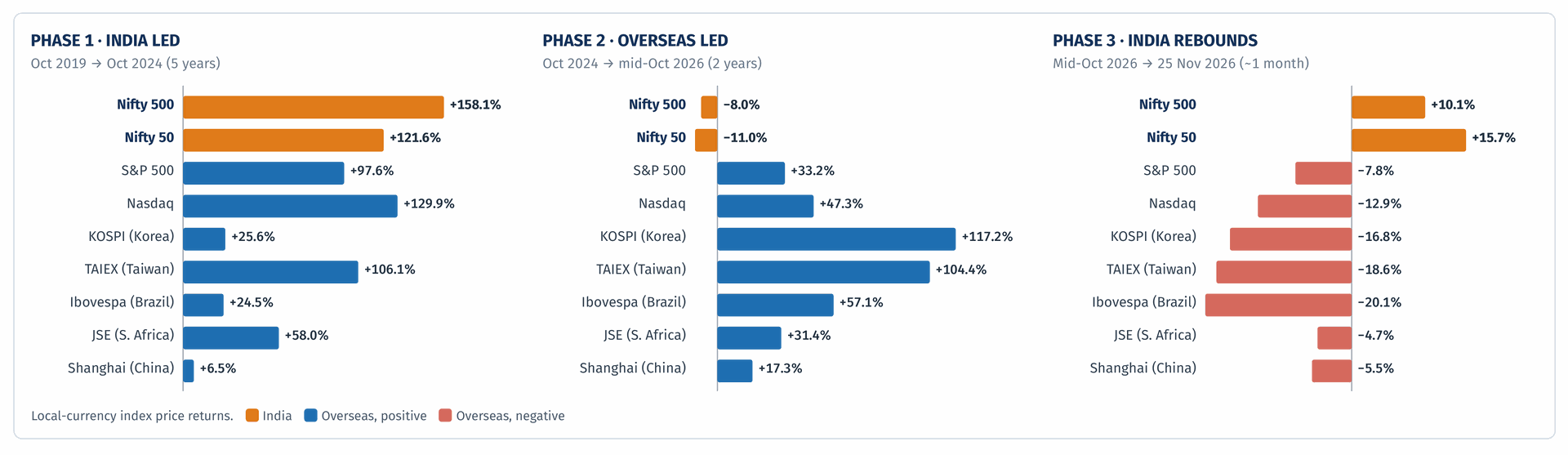
From 2019 to 2024 the Nifty 500 rose 158.1%, ahead of every market shown. Over the next two years it slipped 8.0%, while Korea gained 117.2% and Taiwan 104.4%. Since mid-October, India has led again while Taiwan fell 18.6% and Korea 16.8%.
Every market has its season
Across 13 indices, six different markets topped the table in eight periods: the Nasdaq, Nifty Smallcap 250, Brazil, Korea, Taiwan and the Sensex. In the year to October 2022, every index fell.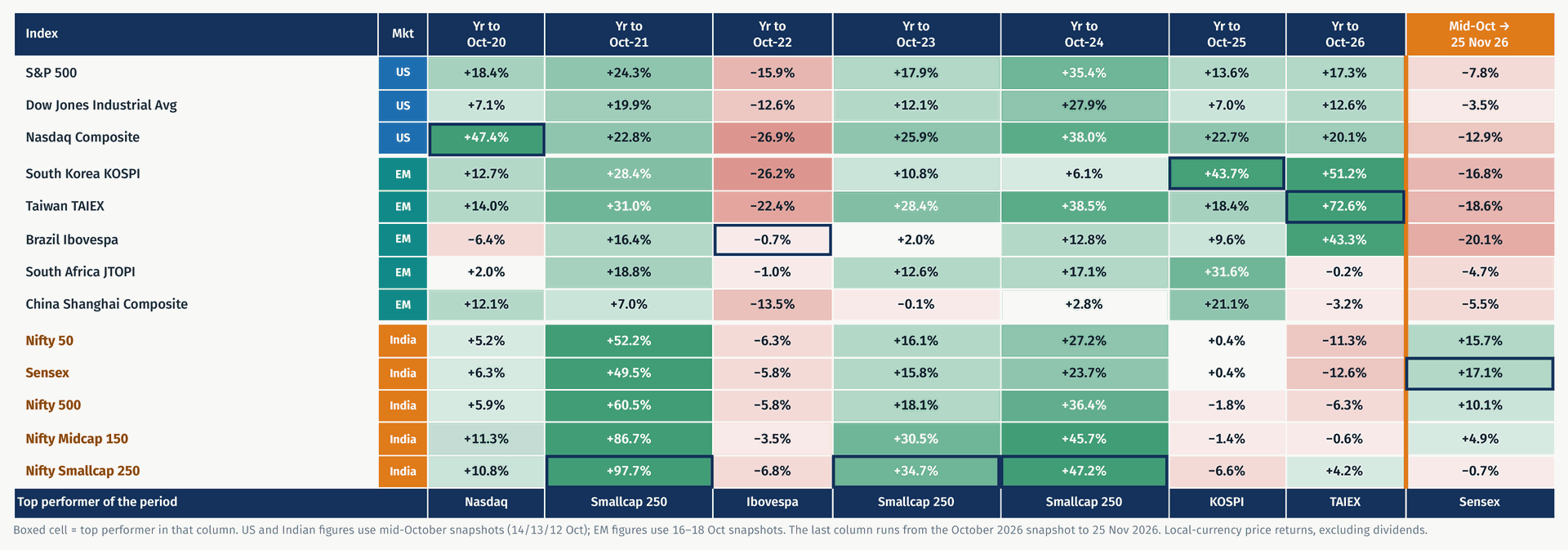
Slow phases also rarely hit every market at
once. When the S&P 500 went nowhere in 2021–23 (−0.8%), the Nifty
500 gained 11.3% and the Nifty Midcap 150 25.9%. In India's own lull, the Nifty
50 fell 11.0%, then rebounded 15.7% in about six weeks.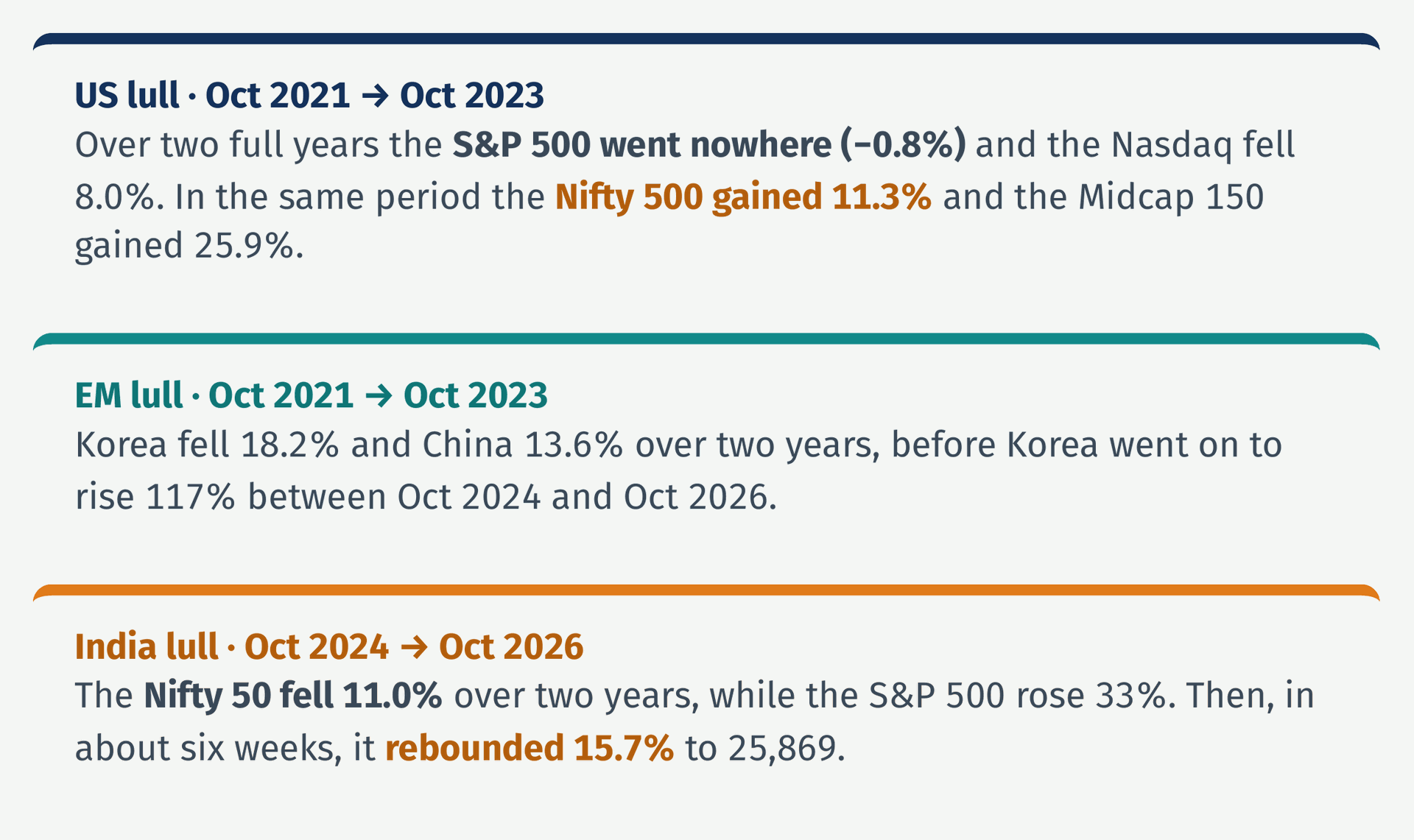
Why India stays the core
Over about seven years, the Nifty Midcap 150 compounded at 21.2% a year and the Smallcap 250 at 21.1%. The Nifty 500 delivered 14.4% a year, ahead of the S&P 500 (13.3%) and far ahead of China's Shanghai Composite (2.4%).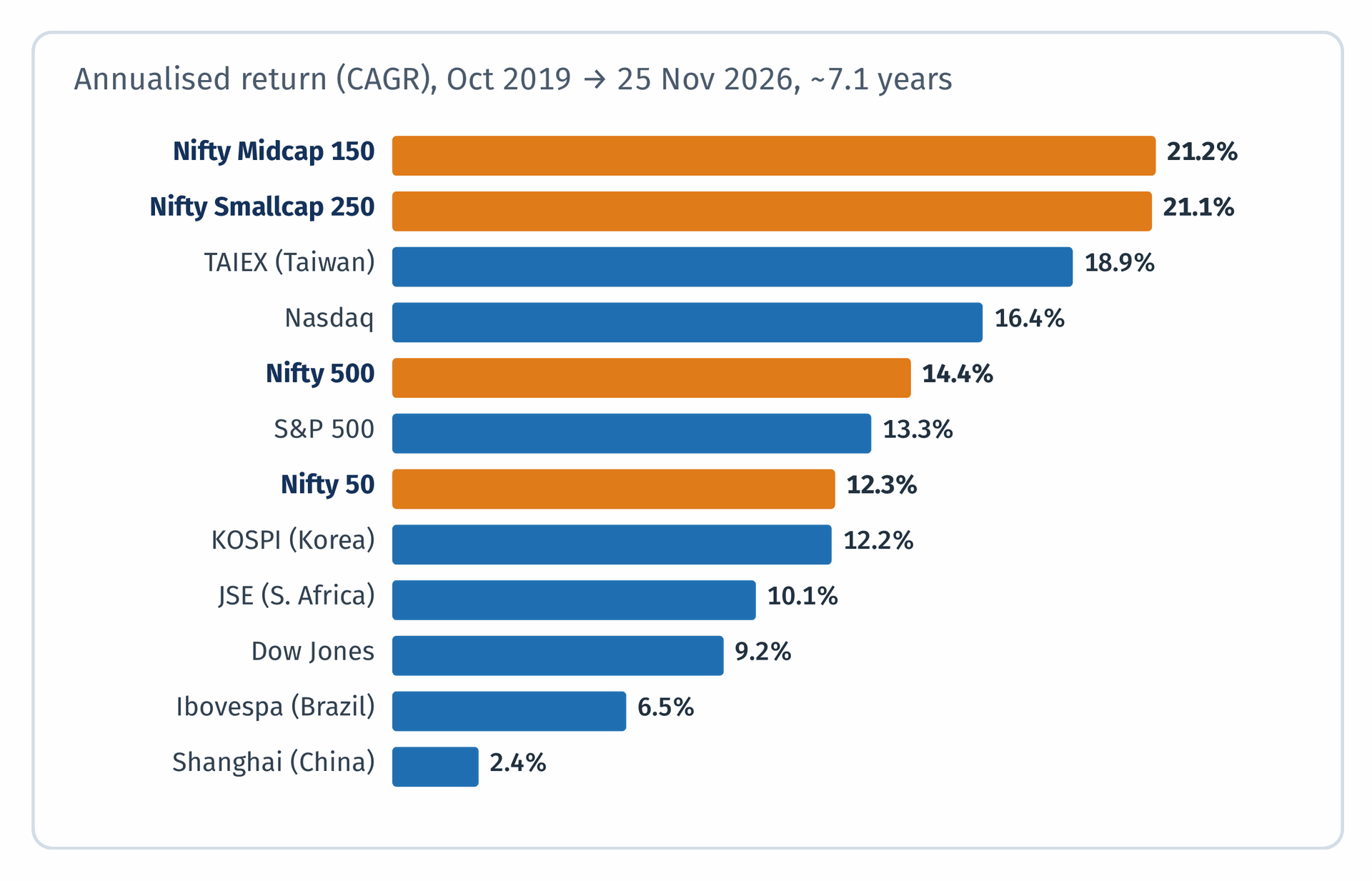
What a 15% overseas slice would have done
An illustrative 85% India + 15% US mix gave up a little in India's best years and cushioned its worst. It cut the 2024–26 fall to −1.8% instead of −8.0%, and still returned +158.5% over seven years against +161.3% for India alone.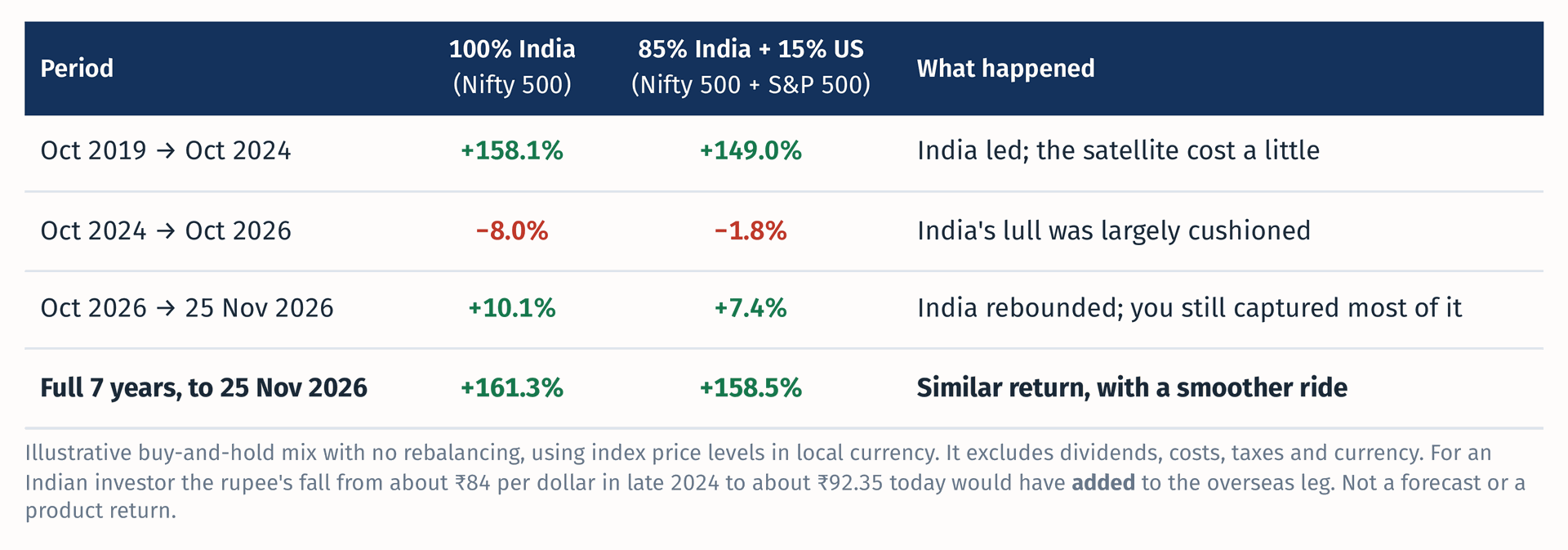
Why consider it now
The rupee has stabilised at ₹92.35 per dollar (25 November), from ₹95.78 on 12 October. Overseas markets have corrected 4% to 20% since mid-October, while foreign investors bought a record ₹1 lakh crore+ of Indian equities in November. US valuations remain elevated (CAPE about 41), so overseas purchases should be staged and sized small.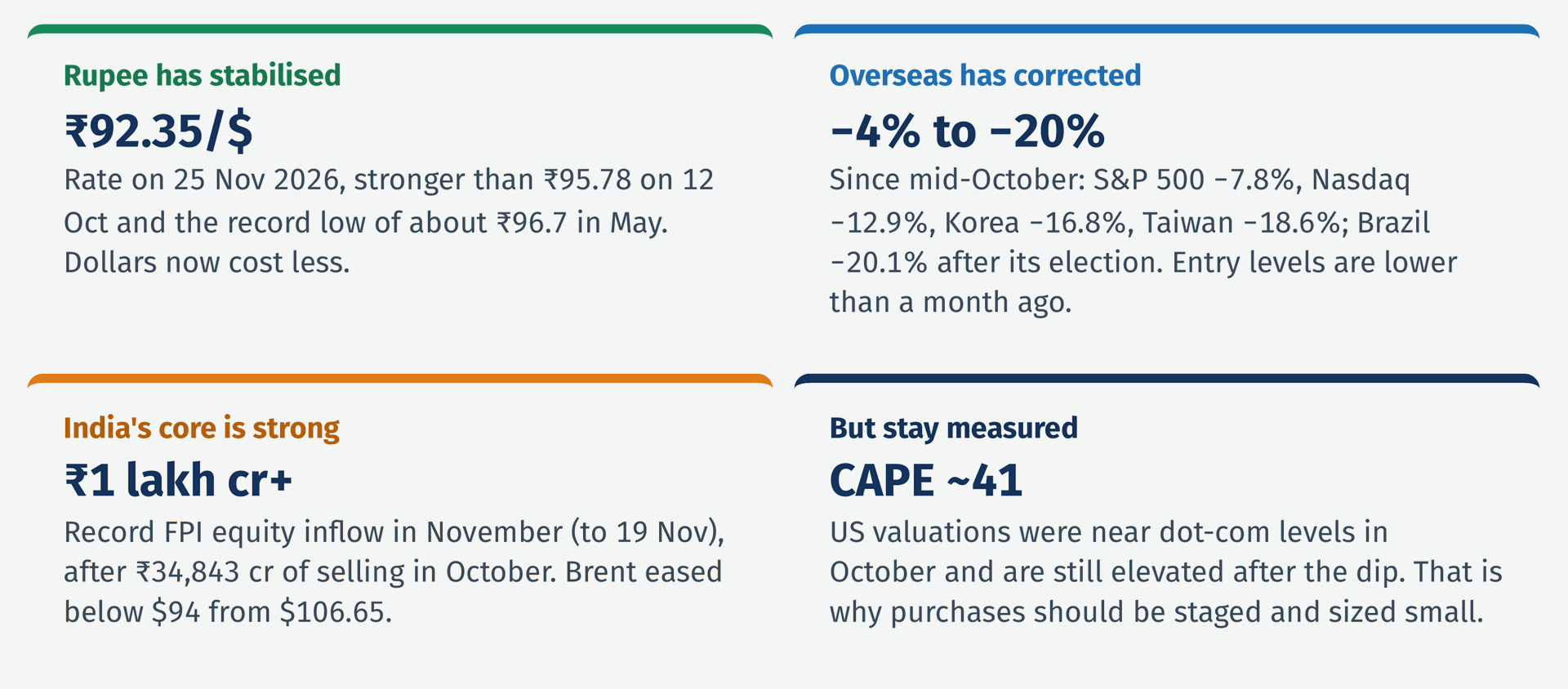
The recommended structure
Keep 85%–90% of equity in India and add a 10%–15% overseas satellite, about two-thirds in US or global funds and one-third in emerging markets outside India. Start with a minimum lump sum, top up regularly with smaller amounts, and rebalance once a year.
What to do
• Stay invested and keep your SIPs running, especially when markets are down.
• Don't redeem after a bad year, and don't chase last month's winner.
• Review your portfolio once a year and bring it back to target.
Index price returns in local currency, excluding dividends, 14 October 2019 to 25 November 2026. The 85/15 mix is an illustrative buy-and-hold portfolio and excludes costs, taxes and currency moves. Exhibits are taken from the report India at the Core, the World as a Satellite (25 November 2026). Past performance is not indicative of future results. This article is educational and is not personalised investment advice.
Mutual fund investments are subject to market risks. Read all scheme-related documents carefully.